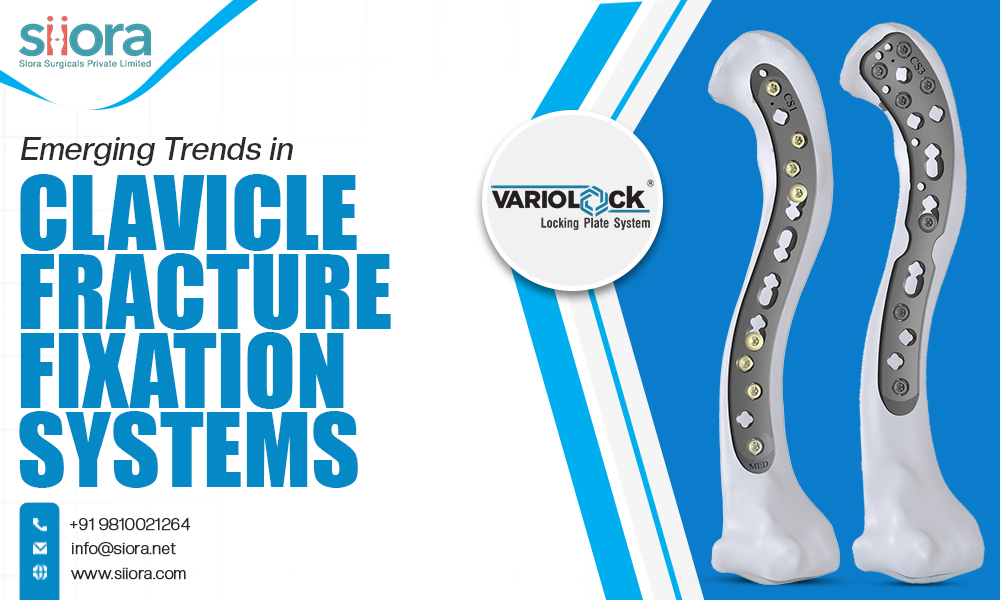
Clavicle fractures used to spell weeks of sling life and shoulder aches, but clavicle locking plates have changed the game. No more wires or tension bands slipping loose—these pre-contoured, multi-hole wonders lock screws at fixed angles for bombproof stability. As ortho evolves, locking plates for clavicle fixation are getting smarter, with trends leaning toward anatomic fits, hybrid combos, and biology-friendly tweaks. Here’s what’s hot in 2025 for getting shoulders swinging again.
Anatomic and Pre-Contoured Designs
Gone are flat plates needing endless bends that fatigue metal. Pre-contoured locking plates hug the clavicle’s S-curve out of the box—body, lateral third, even acromial extensions. 3D-printed customs from CT scans? Perfect match, no intraoperative kinks weakening holds.
Surgeons rave: superior contour means better compression, less prominence under skin. Multidirectional holes (some variable-angle) fan screws into cortex for rotation lock. Unions hit 98%, malunions under 2%—patients shrug off pain by week four.
Hybrid Locking: Plates + Suspensory
Distal clavicle breaks (Neer II) with CC ligament tears demand vertical stability. Locking plates paired with tunneled TightRope or EndoButtons dominate. Plate spans fracture horizontally; button cinches coracoid – clavicle vertically like native ligaments.
Studies show 100% union, CC distance spot-on, Constant scores 92 at six months. Fewer AC irritations than hook plates (gone for good), hardware removal dips to 5%. High-energy sports fractures thrive—no migration, early overheads.
Low-Profile and Low-Stiffness Innovations
Bulky titanium stressed bone unevenly, delaying callus. Ultra-low-profile locking plates (1.5-2.0 mm thick) sit flush, dodging pectoralis rubs. Low-modulus alloys or carbon composites flex like clavicle, sharing load for faster primary healing.
Variable angle plates let screws hunt dense bone in osteoporotics—pull-out resistance jumps 25%. Coatings like HA speed ingrowth; bioresorbables dissolve post-union, skipping kids’ second surgeries.
Superior Locking Mechanics
Fixed-angle locking creates angular stability—no toggle in comminuted midshafts. Divergent screws (AP/ML planes) fight rotation; rafting options buttress lateral thirds. Threaded heads grip plates tight under cyclic chew or swing loads—fatigue life millions of cycles.
Compression slots first squash gaps, then lock rigid. No Z-effect woes; plates stay true.
Shifting Indications and Early Fixation
Trends push surgical fixation for displaced midshafts (>2 cm shorten), laterals >1 cm, all kid angulations >30°. Nonunions plummeted 50%. Arthroscopic peeks guide buttons under plates precisely.
Outcomes dazzle: DASH 12 at year one, 96% unions. Complications? 4% irritations (less than hooks), revisions are rare. Athletes PR by three months; elders garden sling-free.
Surgical Smarts
Approach superior or anterior—protect suprascapular nerve. Pre-bend minimally, fluoro AP/axillary checks. Screws 14-24 mm, unicortical distally. Early motion week one, full by six.
Tool Picks by Break
- Midshaft stable: Straight locking plate.
- Distal unstable: Curved plate + CC button.
- Porotic/complex: Low-stiff anatomic with variable screws.
Ops 40 min, blood <40 ml. Fluoro quick; physio ramps fast.
What’s Next?
Clavicle locking plates trend leaner: customs everywhere, hybrids standard, dissolvables mainstream. Less metal, more mimicry—fewer pulls, quicker lives. In shoulder bays, they mean sure bets, strong holds, shoulders soaring sans sagas.
 Siora Surgicals Pvt. Ltd.