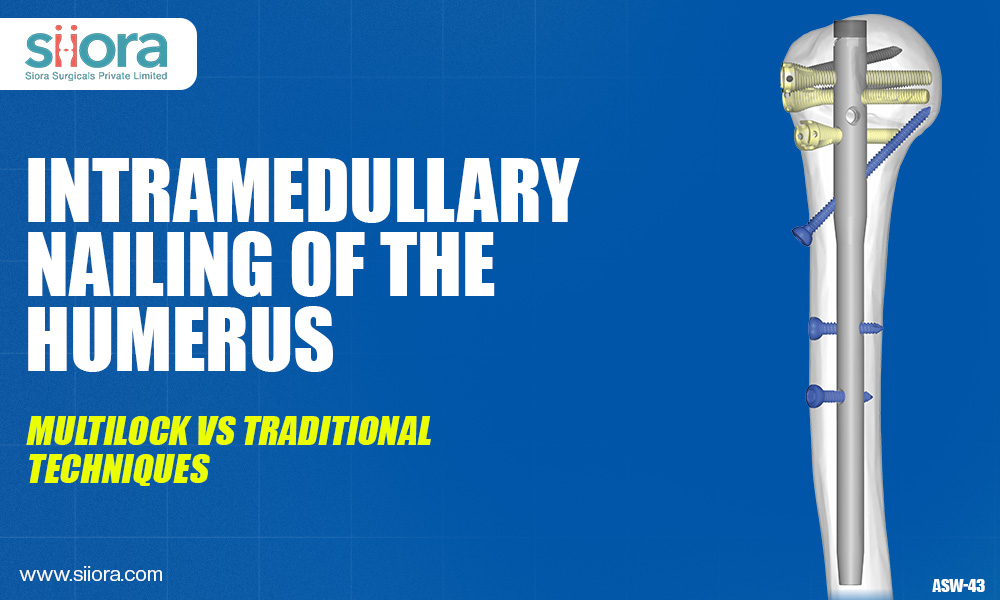
When someone breaks their humerus, the long bone in the upper arm, doctors often need to use a metal nail inside the bone to help it heal properly. This technique, called intramedullary humeral nailing, has been around for a while, but it’s evolved a lot over time. Two common approaches today are the traditional curved nails and the newer MultiLock straight nails. Each has its own way of stabilizing the bone, and understanding the difference can help patients and doctors make the best choice for recovery.
Traditional Intramedullary Nails
Traditional nails are like curved rods inserted through a side entry point near the shoulder. This method works well for many fractures and helps avoid damage to the joint surface. But there’s a catch. Because these nails go in through the side, they can sometimes hurt the rotator cuff, a group of muscles and tendons that help move the shoulder. Imagine having to fix a broken bone but accidentally causing some soreness and trouble moving your arm afterward. That’s a downside patients might face.
Also, these curved nails don’t always hold complex fractures securely, especially near the top of the humerus where the bone is more delicate. They stabilize the bone mainly by locking screws along the nail’s shaft, but don’t offer much in the way of controlling the smaller broken pieces near the shoulder. This sometimes leads to longer healing times or even the need for another surgery.
MultiLock Nails: A Newer, Smarter Solution
Enter the MultiLock nail, a newer design that’s getting a lot of attention for solving some of these problems. Instead of a curved shape, it’s a straight metal rod inserted more toward the center of the humeral head. This helps avoid the rotator cuff better, much like taking a more direct but safer route. Think of it as choosing a path that keeps both the road and its guardrails intact.
What’s especially neat about the MultiLock nail is its multiple locking screws that work like extra hands holding the bone bits in place. It uses special screw technology that not only locks the nail firmly but also lets surgeons secure even the tricky fragments around the shoulder. There are also holes in the screws that help surgeons stitch up the rotator cuff if needed, helping patients regain movement faster.
These design upgrades mean fewer complications and often faster healing, especially for tricky fractures or those in older patients with weaker bones.
How These Techniques Affect Recovery?
With traditional nails, patients often must be cautious with shoulder movement after surgery because of possible rotator cuff irritation. The MultiLock system, on the other hand, is designed to minimize this discomfort and encourage early movement. Early motion is key to preventing stiffness and getting back to day-to-day activities sooner.
Studies and surgeons’ experiences suggest that MultiLock nails lead to shorter hospital stays, less post-surgery pain, and fewer follow-up surgeries compared to traditional nails. Patients can often start gentle exercises earlier, which helps maintain muscle strength and shoulder function.
So, Which Is Right for You?
Choosing between these nails depends on several factors like the type of fracture, bone quality, patient age, and activity level. Traditional nails are still useful, particularly in straightforward fractures, and have a good track record of safety and effectiveness. But for more complicated breaks near the shoulder or in older adults, MultiLock nails offer a more reliable and patient-friendly option.
In the end, the goal is the same: help the bone heal strong and restore arm function as fully as possible. Advances like the MultiLock system bring us closer to that goal by combining smart design with surgical precision.
Are you looking to explore advancements in the healthcare industry? Register for Arab Health Dubai 2026 and see the future of the medical sector.
 Siora Surgicals Pvt. Ltd.