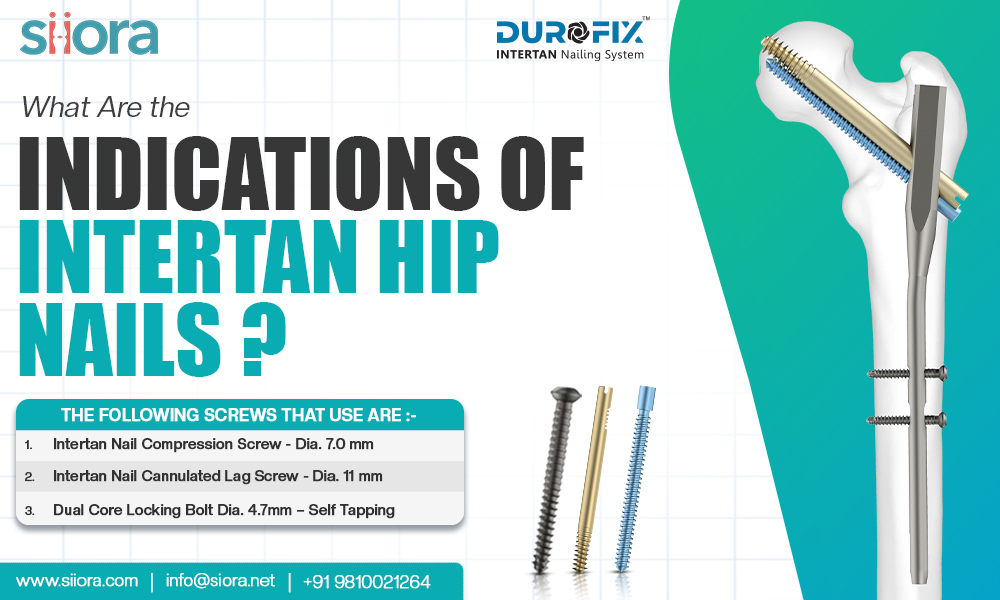
Hip fractures are something most orthopedic surgeons deal with quite often, especially in elderly patients. These injuries usually come after simple falls, but the impact on mobility can be serious. Choosing the right implant matters a lot, and that’s where Intertan hip nails come into the picture.
Intertan nails are designed mainly for fractures around the upper part of the femur. They offer strong fixation and better control over rotation, which is often a concern in unstable fractures. But like any implant, they are not meant for every case. Knowing when to use them makes all the difference.
What Are the Uses of Intertan Hip Nails?
Intertrochanteric Fractures
One of the most common indications for Intertan nails is intertrochanteric fractures. These occur between the greater and lesser trochanter of the femur. In many cases, especially unstable ones, maintaining alignment can be tricky.
These nails work well here because of their dual screw mechanism. This design helps in holding the femoral head securely and reduces the chances of rotation. Surgeons often prefer them when the fracture pattern shows a higher risk of displacement.
Unstable Fracture Patterns
Not all hip fractures behave the same way. Some are relatively simple, while others are more complex and tend to collapse if not fixed properly. Intertan intramedullary nails are particularly useful in unstable fracture patterns, such as those with comminution or loss of medial support.
In these cases, the added stability from the implant helps maintain the reduction during healing. It also lowers the chances of complications like implant failure or excessive shortening.
Subtrochanteric Extension
Sometimes, the fracture line extends below the trochanteric region into the subtrochanteric area. These fractures are exposed to high mechanical stress and can be difficult to manage.
Intertan femur nails, being intramedullary devices, provide better load sharing in such situations. Their position inside the bone allows them to handle stress more effectively compared to some other fixation methods.
Osteoporotic Bone Conditions
Elderly patients often have weak or osteoporotic bones, which makes fixation more challenging. Screws may not hold as firmly, and the risk of cut-out increases.
In such cases, Intertan hip nails can be a good option. Their design improves purchase in the femoral head and offers better stability, even in compromised bone quality. This helps in early mobilization, which is important for recovery.
Failed or Risk-Prone Cases
There are situations where a surgeon anticipates higher chances of failure with standard implants. This could be due to fracture complexity, patient factors, or bone condition.
Intertan femoral nails may be chosen in these cases to reduce risks. Their biomechanical advantage provides extra confidence in maintaining fixation until healing occurs.
Final Thoughts
Intertan hip nails are not meant for every hip fracture, but they are extremely useful in the right situations. Intertrochanteric fractures, unstable patterns, subtrochanteric involvement, and osteoporotic bones are some of the key indications where they perform well.
At the end of the day, the choice depends on the fracture and the patient. When used thoughtfully, Intertan nails can help achieve stable fixation and smoother recovery for patients dealing with hip fractures.
If you want to explore advanced Intertan Nails and other orthopedic devices, visit booth Y23 at the Miami Exhibition 2026.
 Siora Surgicals Pvt. Ltd.