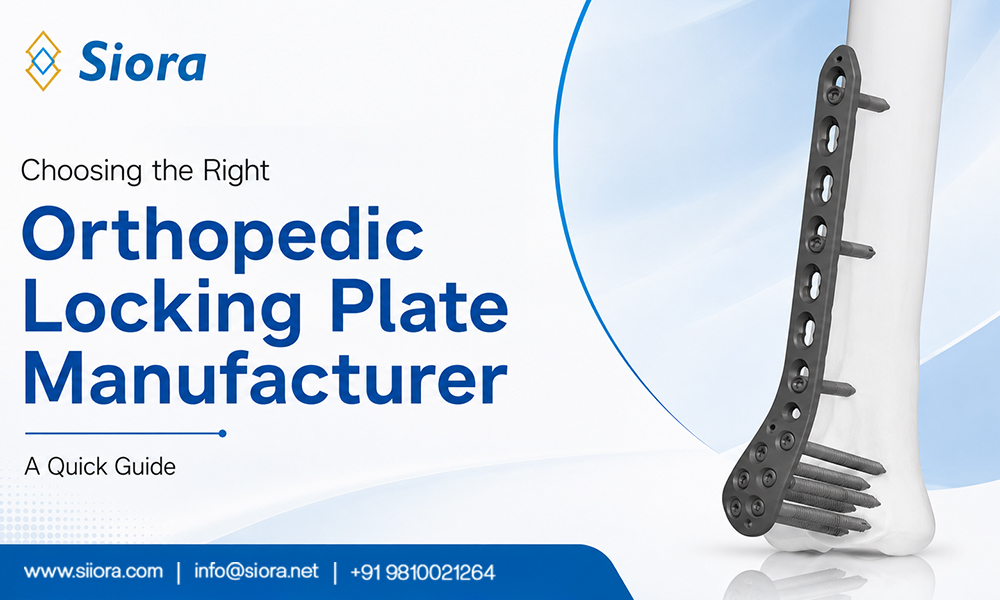
Selecting the right orthopedic locking plates manufacturer is an important decision for distributors, hospitals, surgeons, and healthcare businesses. Locking plates are widely used in fracture fixation and play a vital role in supporting bone stability during the healing process. However, not every manufacturer offers the same level of product quality, technical expertise, manufacturing capability, or regulatory support.
With numerous orthopedic implant suppliers available in the global market, choosing the right partner can feel challenging. A lower price may appear attractive initially, but quality, consistency, documentation, and long-term reliability should always be considered. Here is a quick guide to help you make a more informed choice.
Evaluate Manufacturing Quality and Standards
The first thing to examine is the manufacturer’s quality management system. A reliable orthopedic implant manufacturer should follow internationally recognised quality standards and maintain strict controls throughout the production process.
Look for manufacturers working under standards such as ISO 13485, which is specifically designed for medical device quality management. Depending on your target market, you may also need to check regulatory approvals, product registrations, CE marking, or other applicable certifications.
It is also worth asking about material traceability, inspection procedures, sterilisation or cleaning processes, packaging, and final quality checks. These details provide a clearer picture of how seriously a company approaches product safety and consistency.
Check the Material and Product Design
Orthopedic locking plates are commonly manufactured using medical-grade stainless steel or titanium alloys. The choice of material can influence factors such as strength, weight, biocompatibility, and corrosion resistance.
A dependable manufacturer should be transparent about the materials used and provide relevant specifications when required. You should also review the overall plate design, locking mechanism, screw compatibility, hole configuration, and available sizes.
A well-developed product portfolio should offer options for different anatomical regions and fracture types. This can make it easier to source multiple implant solutions from one trusted manufacturing partner.
Assess Manufacturing Experience
Experience matters, particularly in the medical device industry. Manufacturers with a long history of producing orthopedic implants are often better equipped to understand the challenges associated with machining, quality control, documentation, and international supply.
Ask how long the company has been operating and what types of orthopedic implants it manufactures. A manufacturer specialising in trauma implants and related orthopedic products may offer stronger technical knowledge than a general engineering company that has recently entered the medical device sector.
However, experience should not be judged by years alone. Modern production technology, trained personnel, research capabilities, and continuous product development are equally important.
Consider OEM and Customisation Capabilities
For distributors and private-label businesses, OEM capabilities can be a major deciding factor. The right manufacturer should be able to support custom branding, packaging, product labelling, and, where feasible, product modifications based on market requirements.
Discuss your requirements before committing. Find out whether the manufacturer can provide flexible order quantities, customised packaging, and technical documentation for your target market.
A manufacturer that understands distributors’ needs can become a valuable long-term business partner rather than simply a product supplier.
Review Supply Reliability and Communication
Product availability and delivery timelines can directly affect your business. Before choosing a supplier, ask about production capacity, inventory management, export experience, and typical lead times.
Clear communication is equally important. A responsive team that can provide quotations, product information, technical documents, and order updates promptly will make the working relationship much smoother.
Final Thoughts
Choosing an orthopedic locking plate manufacturer should never be based on price alone. Product quality, material standards, manufacturing experience, certifications, OEM support, and supply reliability all deserve careful consideration.
The right manufacturing partner can help you build a dependable orthopedic implant portfolio and create long-term confidence in your market. Taking time to evaluate these factors before making a decision can save you from quality concerns, supply disruptions, and unnecessary business risks later.

